Curating knowledge
How to build self-directed training your team will actually use
Self-directed training is all about giving teams the tools to move what they already know into something the whole business can use.

Ryan Macpherson
Editor:
Stephanie Chan
Most organizations say they want employees to take ownership of their own learning. But scroll past the talking points, and the reality looks different. Someone builds a course. It lives in a portal. Employees complete it by the deadline. That's not self-directed training; it's a top-down process dressed up in flexible packaging.
Real self-directed learning puts people in the driver's seat of their own learning journey: identifying gaps, building resources, and sharing knowledge without waiting in a queue.
Here's what this guide covers:
What self-directed training actually means and how it differs from self-paced
The benefits for employees and the broader organization
How the lifelong learning process works in practice, step by step
Real-world examples across different teams
How to build your first self-directed course with Coassemble
What is self-directed training?
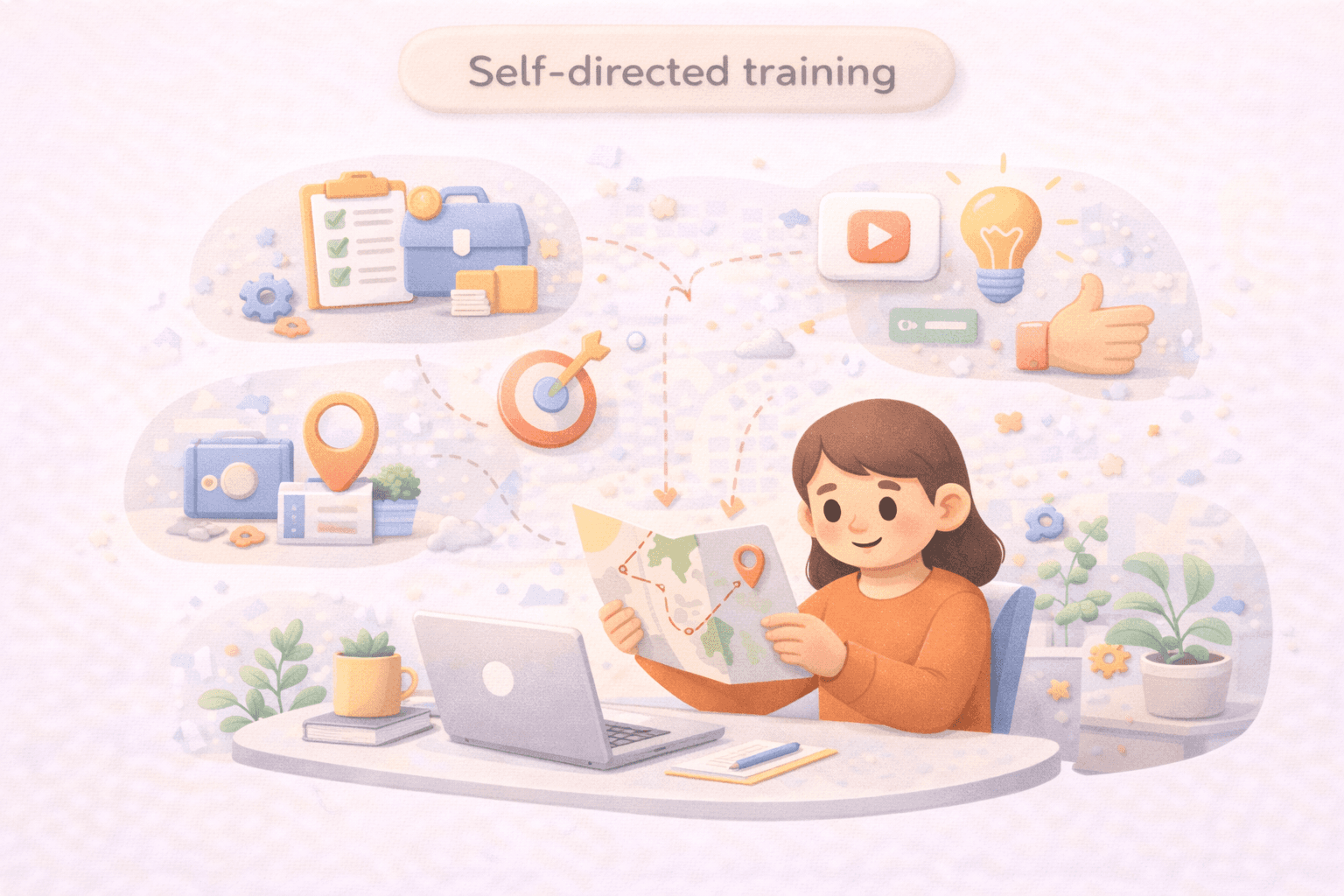
Self-directed training is when employees take responsibility for their own learning needs. They identify gaps, seek out resources, and evaluate their own progress. It's not a teaching method handed down from above. It's a shift in who owns the learning process.
Education researcher Malcolm Knowles was one of the first to formalize this idea. His work best describes self-directed learning in adult contexts: people engage more deeply when they have control over what they study and why.
Self-directed learners don't wait to be told what to develop. They spot a knowledge gap, set their own learning goals, and take initiative to close it.
Self-directed vs. self-paced training
These two terms get used interchangeably. They shouldn't.
Self-paced training is about when you learn. The course already exists. Someone else set the learning goals, built the content, and defined success. Employees move through it at their own pace.
Self-directed learning is about what and why. The learner or the team identifies the need, shapes the learning experience, and takes ownership of the outcome.
The difference is agency, not timing.
Think of it this way: self-paced removes the speed limit. Self-directed hands someone a map and lets them choose the destination.
In a workplace context, self-directed doesn't mean employees are left to figure things out alone. It means teams have the tools and autonomy to build the training they actually need, rather than waiting for a course that may not arrive, or may not be relevant when it does.
Benefits of self-directed training
The data makes a strong case. According to Training Industry, around 70% of employee skills are learned on the job itself, not through formal training sessions. A self-directed learning experience works with that reality, not against it.
Here's what changes when employees take ownership of their own learning journey.
For employees
Relevance: Training built around real problems empowers learners to engage in a way that generic courses never do. Nearly 94% of employees say they'd stay longer at a company that invests in their growth. Self-directed learning makes that investment feel personal.
Flexibility: Self-directed learners develop skills at their own pace in learning environments that fit their schedule and learning style. No wasted sessions on topics they've already mastered. Good learning environments encourage students to focus on what actually moves the needle.
Deeper capability: Owning the learning process sharpens more than subject knowledge. It builds the critical thinking and initiative that turn employees into lifelong learners.
For the organization
Speed: Organizations that foster self-directed learning don't wait for training to be commissioned and built. Knowledge moves faster because the people doing the work are the ones creating it.
Retention: Letting employees learn at their own pace can increase retention by up to 67%. Better learning outcomes follow. When people have more control over their own learning needs, they stay.
Scale: One of the biggest advantages of online courses is scale. One well-built course replaces five repeated live sessions. 68% of employees improved workplace skills outside of company-provided training; they're already self-directing. The opportunity is to give them better tools to do it.
How does self-directed training work?
Most teams already have everything they need. The knowledge exists. It's just trapped in documents, slide decks, and the heads of people who've been around long enough to know how things actually work.
Self-directed training is the process of getting that knowledge out and into something useful.
Here's how it works in practice.
Step 1: Identify the need
It usually starts with a recurring problem. New hires keep asking the same onboarding questions. A process has changed, but the documentation hasn't. A product update needs explaining before the next sales call.
Someone on the team spots the gap. That recognition is the starting point of the whole learning process.
Step 2: Gather existing knowledge
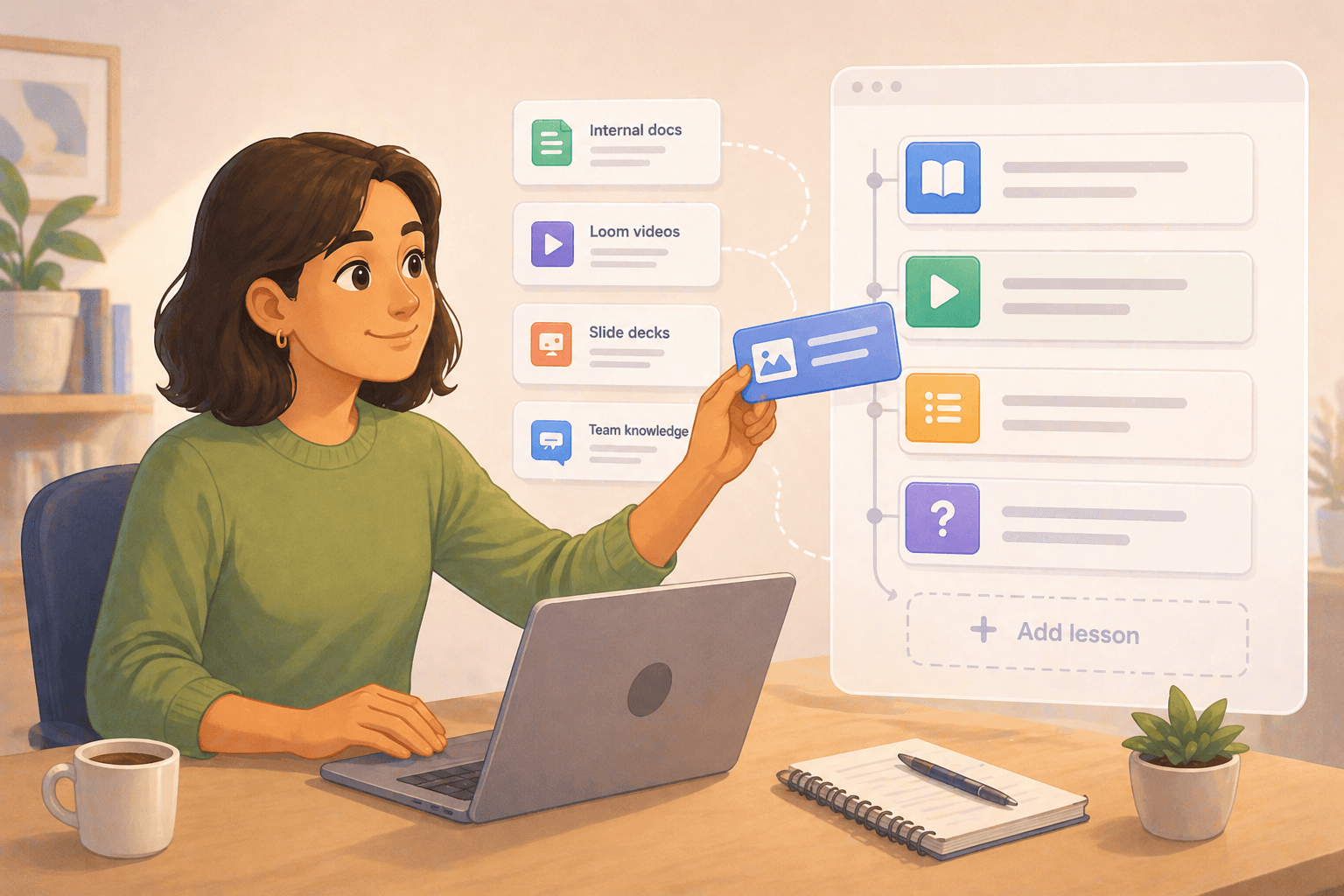
Most teams don't start from scratch. The raw material is already there: SOPs, internal docs, Loom recordings, slide decks, Slack threads. Self-directed learning begins with what people already know, not a blank canvas.
Step 3: Turn it into something shareable
This is where teams typically stall. The knowledge exists, but structuring it into usable training has traditionally required specialist tools or design skills.
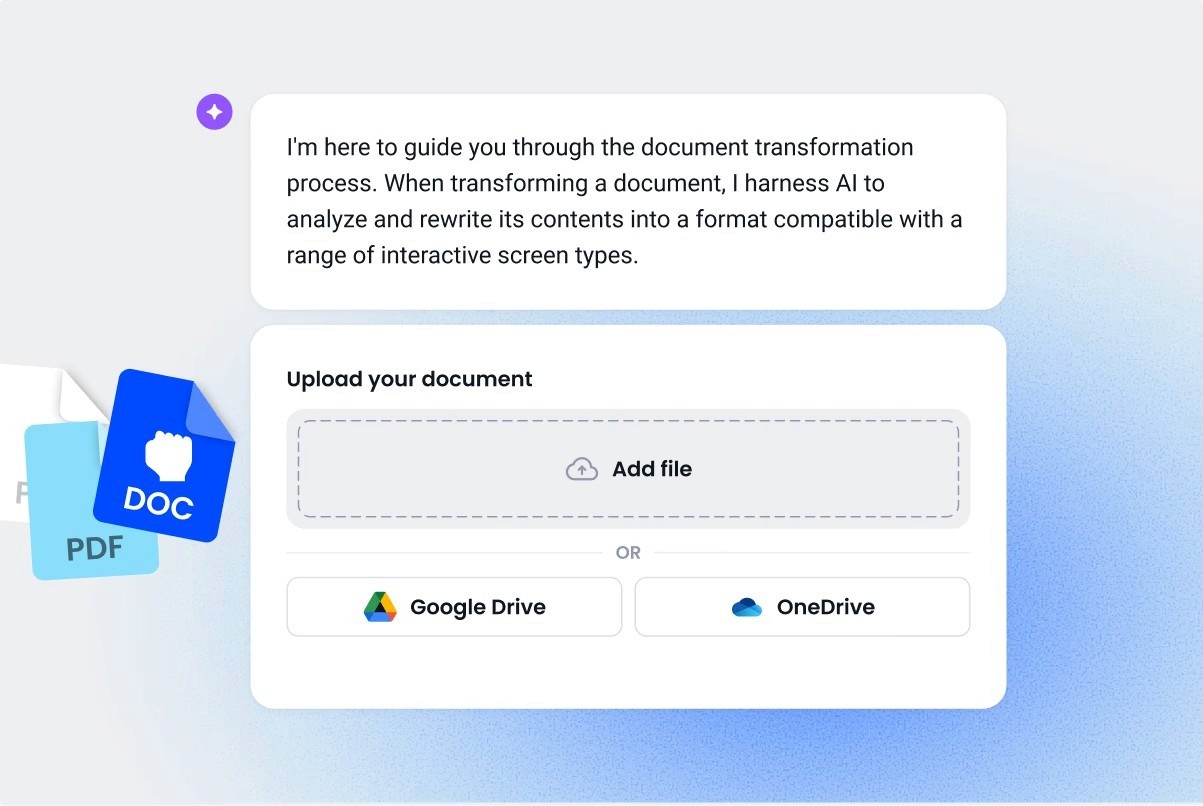
AI-powered knowledge transfer platforms like Coassemble remove that barrier. Upload a document or deck, and it becomes a structured, interactive training course in minutes. No design background needed.
Step 4: Share it where people already work
Good training meets people where they are. Shared in Slack or Teams, it becomes collaborative learning without anyone having to schedule a session.
Step 5: Track, iterate, and keep it alive
Self-directed doesn't mean unaccountable. Track completion, gather feedback, and update content as things change. Training that gets maintained stays useful. Training that doesn't get ignored.
Self-directed training examples
Self-directed learning isn't a concept reserved for higher education or formal development programs. It plays out every day in real workplace situations. Here's what it looks like across different teams.
HR and people ops
A people ops lead has an onboarding checklist. It lives in a Google Doc, and nobody reads it.
With Coassemble, that same doc becomes a branded, interactive walkthrough that new hires complete in their first week. Completion is tracked. Questions stop flooding the same inbox. The knowledge that used to sit idle is now actually onboarding people.
Sales
A sales lead notices reps are inconsistent in how they handle objections. Rather than running another live training session that half the team misses, they build a self-directed sales training course in Coassemble.
Reps work through real scenarios, practice responses, and come to calls better prepared.
See how a sales training course looks in Coassemble: Sales Rep Onboarding: Foundations for Success
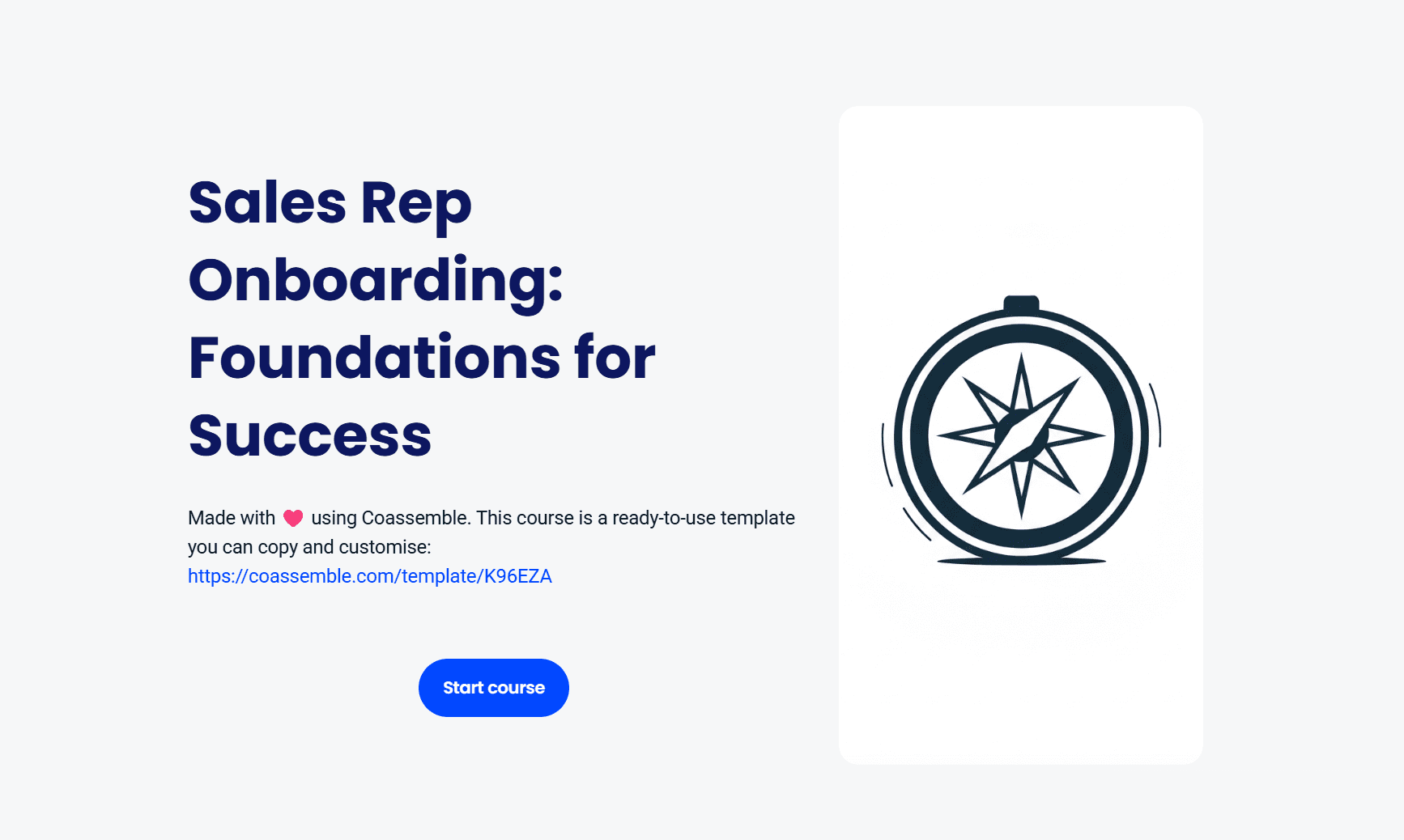
You can use this template link, so you can duplicate and customize this course for your team.
Product and engineering
After every sprint, a product manager takes the release notes and turns them into a short training course for support and sales. No more "can someone walk me through the new feature?" messages in Slack. The whole team stays up to speed without a single live session.
Customer support
A senior support rep documents the ten trickiest customer issues the team faces. Instead of passing that knowledge on through shadowing and one-off conversations, they build a troubleshooting course that new team members can work through at their own pace.
Expertise that used to live in one person's head becomes a shared resource.
Operations and content teams
An ops lead rolls out a new tool or process across the business. Instead of five live sessions across time zones, they build one self-directed course and share it in Slack.
On the other hand, content teams use the same approach for emerging topics like Generative Engine Optimization (GEO): rather than briefing every writer individually, the team builds one structured course covering what GEO is, why it matters, and how to apply it.
See how a GEO training course looks in Coassemble: Beyond Keywords: Mastering Generative Engine Optimization (GEO)
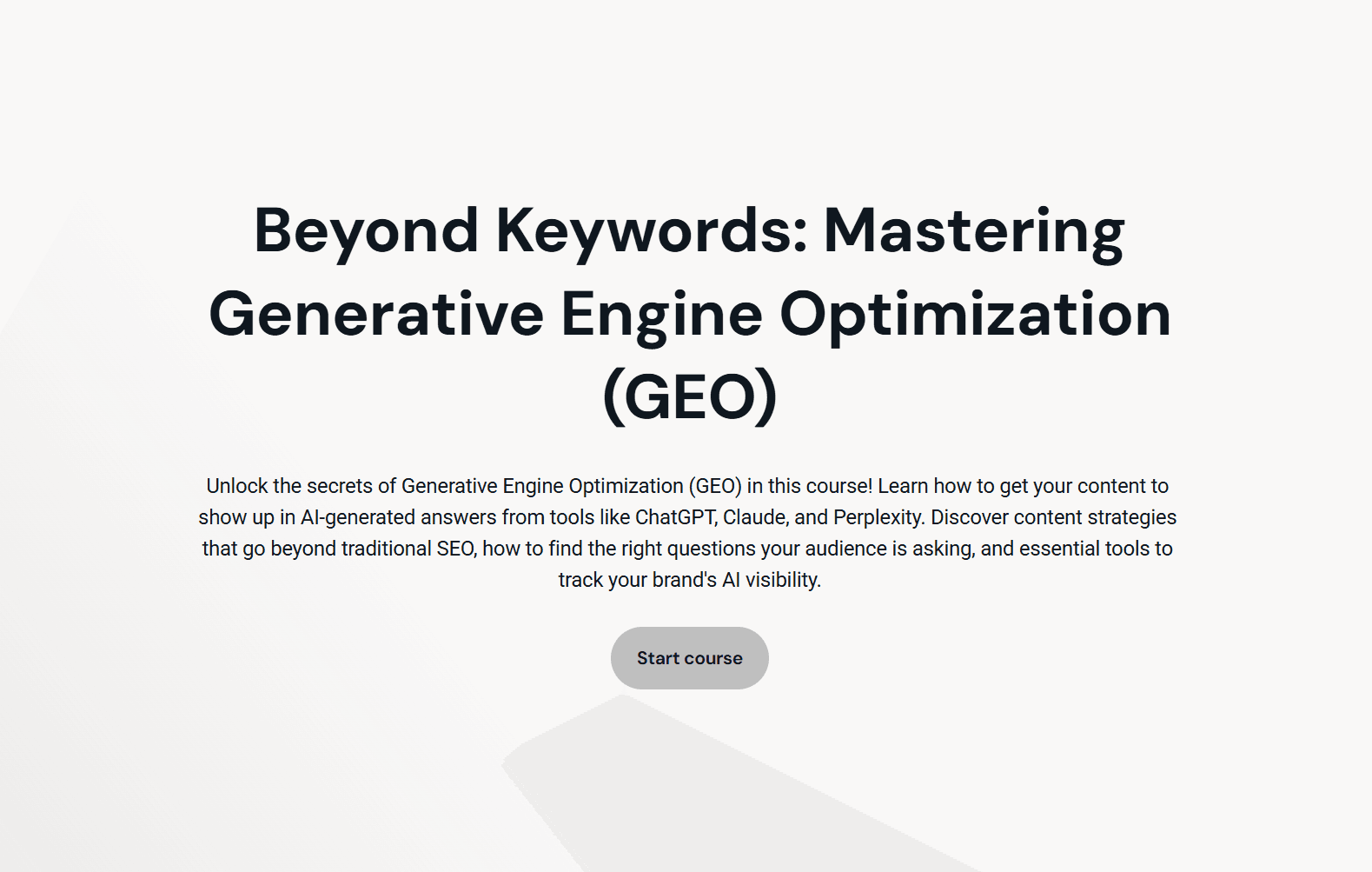
Each of these examples follows the same pattern. Someone identifies a knowledge gap, uses what they already know, and turns it into something the whole team can access. That's knowledge sharing in motion.
How to create self-directed training using Coassemble
Now that you're familiar with Coassemble, here's how to turn knowledge into actual training. It's a practical walkthrough for anyone who needs to build something useful, fast, without waiting on a specialist.
Open the course builder.
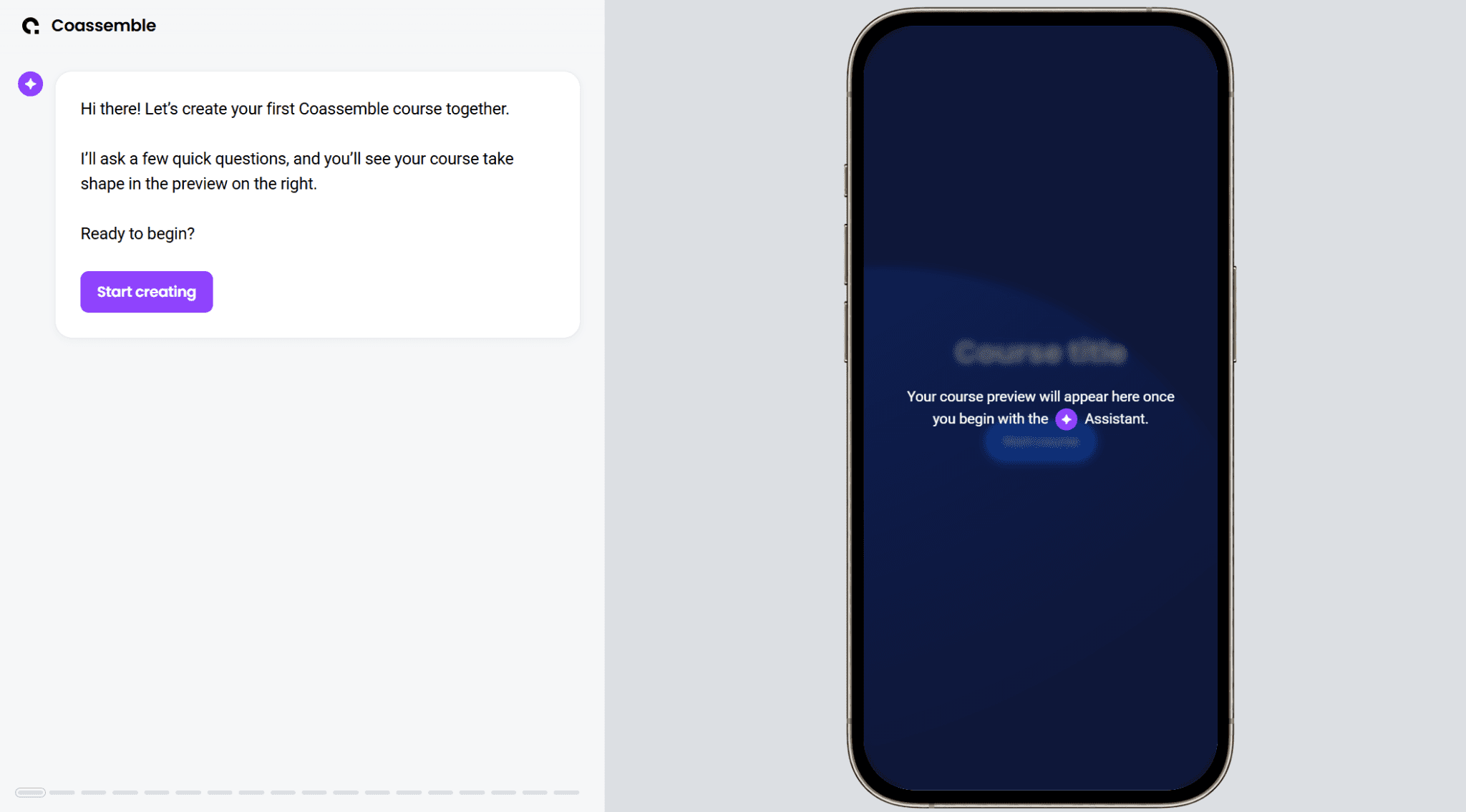
Head into Coassemble's course builder and select "Start creating." No setup required. No training needed to get started.
Upload what you already have.
Choose to transform existing content. Drop in a PDF, PowerPoint, or Word file: a sales playbook, onboarding guide, product brief, or process doc. The AI reads through it, identifies the core ideas, and structures them into a ready-to-use course.
For example, if you already wrote a lot of content about GEO, you can upload the blog drafts.
Set the direction.
A short series of questions helps the AI understand your audience and intent. The answers shape how the course is written, so the output feels purposeful rather than generic.
Review the generated course.
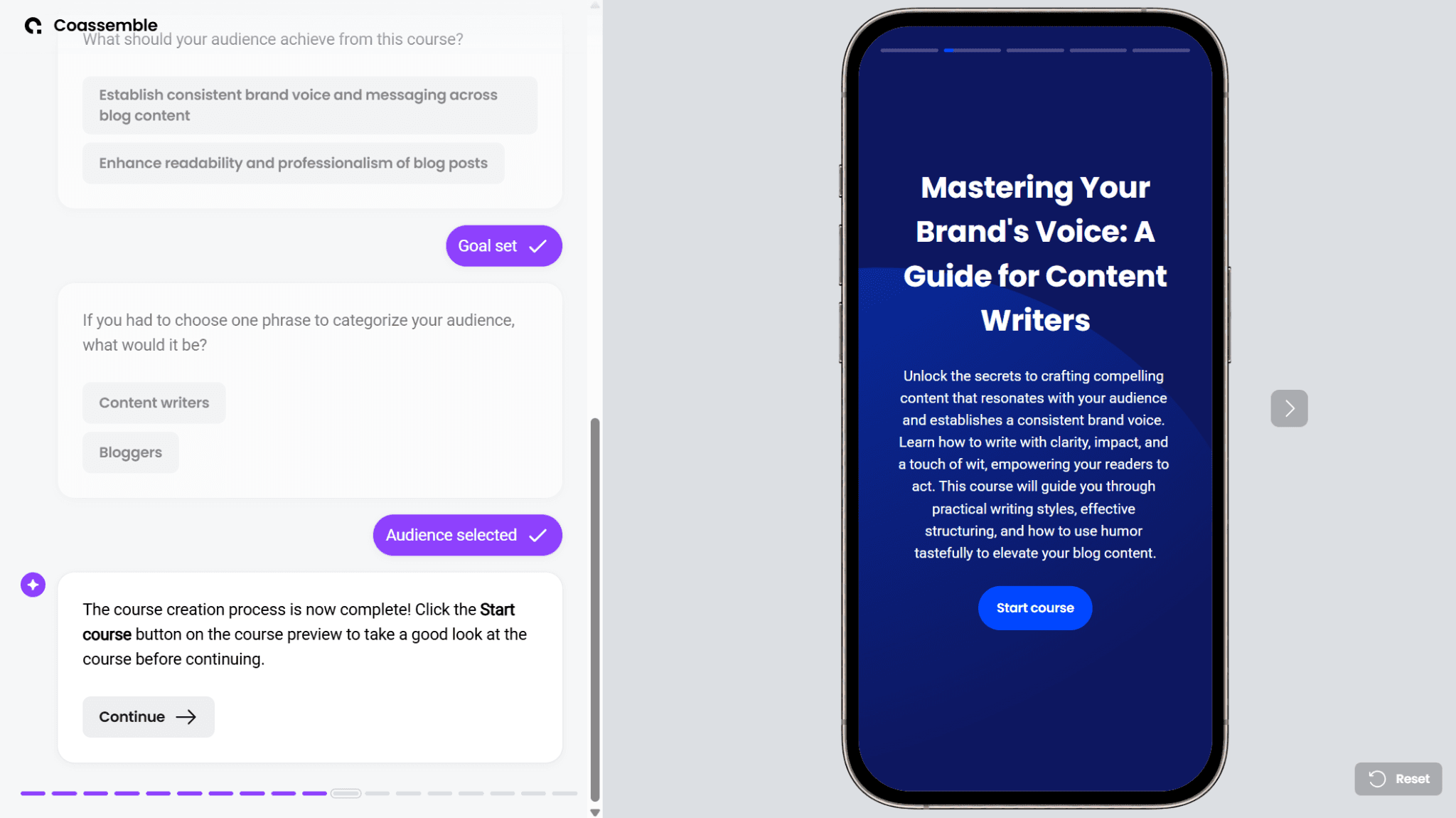
A full course appears in seconds, organized into lessons and sections. Read through it and check for accuracy. When it looks right, click "Continue".
Share training where work happens.
Before publishing, layer in quizzes or branding as needed. Then choose how to share it:
Drop a link into Slack
Send it directly to specific team members via email
Export it as SCORM and push it through your existing LMS
Embed it inside your sales platform
Coassemble works alongside the systems your team already relies on. It plugs into an existing LMS or runs independently if you don't have one.
For a deeper look at how AI is reshaping course creation, see how AI eLearning authoring tools are evolving.
Save, track, and improve.
Create a free account to save your work and keep editing over time. From there, monitor completion rates, review assessment scores, and spot where knowledge gaps persist. When processes change, update the course, and every learner sees the new version immediately.
Ready to try it? Start building for free at coassemble.com.
Wrapping up
Self-directed training is all about giving teams the tools to move what they already know into something the whole business can use.
A support team documents their expertise and shares it with new hires in minutes. A product team keeps everyone up to speed without a single live session. Onboarding stops depending on one person's availability.
The best training comes from the people doing the work. Your teams already have the knowledge. Coassemble helps them move it – working alongside your existing systems, not replacing them. Start building today for free.
FAQs on self-directed training
What is self-directed training?
Self-directed training is when employees take ownership of their own learning needs. This means identifying gaps, finding resources, and tracking their own progress rather than waiting for assigned courses.
Is there an AI tool that can help me create training easily?
Yes. Coassemble lets you upload existing docs or decks and turns them into structured, interactive training in minutes. No design skills needed. Free to start.
Can employees create their own training without L&D?
Absolutely. Any team member can build a polished, branded course using Coassemble's AI-powered course creation tool. No specialist required.
How do I get started with self-directed training?
Start by identifying a knowledge gap your team faces right now. Gather what you already have, upload it to Coassemble, and build from there.
Read More
Join the knowledge revolution today
Unlock knowledge. Boost engagement. Drive results
No credit card required

Join the knowledge revolution today
Unlock knowledge. Boost engagement. Drive results
No credit card required
Join the knowledge revolution today
Unlock knowledge. Boost engagement. Drive results
No credit card required